
Reviewed September 9, 2026
You see “guaranteed rebuilding cost” on your home insurance policy and assume the insurer will pay every cost of rebuilding after a covered loss. Then you find another clause that excludes certain construction costs.
Which wording wins? That question reached the Supreme Court of Canada in 2026, and the answer shows exactly why homeowners need to understand endorsements, exclusions, limits and conditions together.
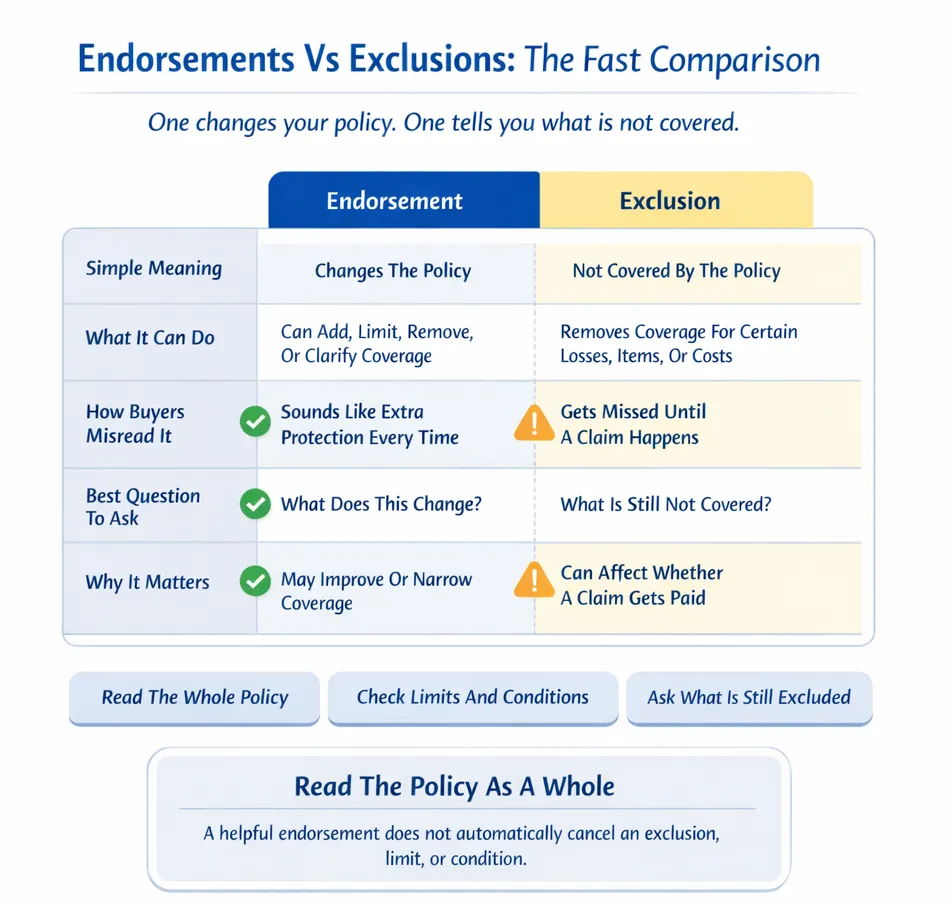
Endorsement vs exclusion
An endorsement changes the original policy wording. The exact wording determines whether it adds protection, changes a limit, removes protection or changes how another provision works.
An exclusion identifies something that falls outside the policy’s coverage, such as a particular loss, cause of damage, cost or circumstance.
A limit sets the maximum amount the insurer may pay for particular coverage.
A deductible sets the amount you pay toward a covered claim before the insurer pays its share.
A condition sets a requirement that can affect how coverage or a claim works.
Why this matters after a loss
Home insurance buyers often focus on the coverage name first. The claim, however, depends on the policy wording that sits underneath that name.
A policy may provide coverage for a type of loss and still apply a deductible, a dollar limit, an exclusion or another condition. You need to read those pieces together.
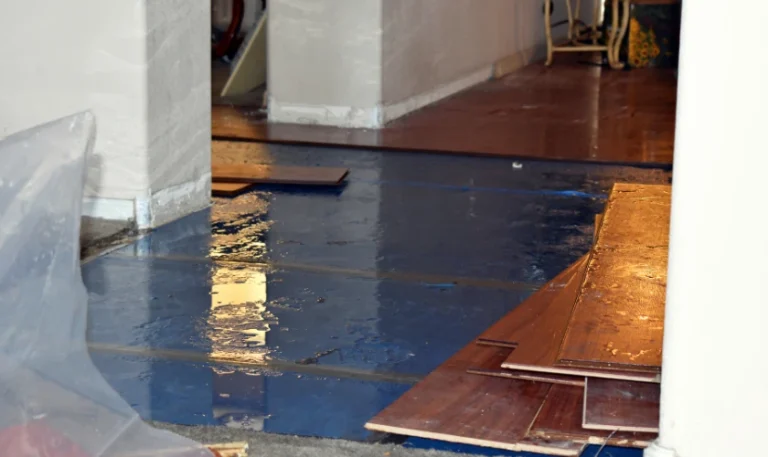
Heavy rain sends water into your basement. You remember buying a water endorsement and expect the insurer to cover everything.
Before you assume that, identify how the water entered, read the endorsement, check the base-policy exclusions, review the deductible and confirm any applicable limits. “Water coverage” alone does not answer the claim question.
The 2026 Supreme Court decision
The Supreme Court of Canada addressed this exact policy-reading problem in Emond v. Trillium Mutual Insurance Co., 2026 SCC 3.
A flood severely damaged the homeowners’ house. Their insurer accepted coverage for the insured loss, but the parties disagreed about extra rebuilding costs required by conservation-authority rules and other legal requirements.
The homeowners had a guaranteed rebuilding cost endorsement. The base policy also contained an exclusion for increased repair or replacement costs caused by zoning and construction laws, subject to a limited additional-coverage provision.
The majority held that the guaranteed rebuilding cost endorsement increased the amount available to rebuild the home, but it did not override the separate compliance-cost exclusion.
The policy provided up to $10,000 in additional coverage for certain legal-compliance costs. The exclusion applied beyond that amount under the wording before the Court.
Read the Supreme Court of Canada’s summary of Emond v. Trillium for the Court’s explanation.
This decision does not mean that every rebuilding endorsement works the same way. The Court interpreted the specific wording in the Emonds’ contract. Your own policy wording controls your coverage.
What guaranteed rebuilding cost actually means
Guaranteed building replacement or rebuilding coverage can allow an insurer to pay rebuilding costs above the stated dwelling limit after an insured loss, subject to the contract’s requirements.
The Financial Consumer Agency of Canada warns that conditions usually apply. For example, an insurer may require you to insure the home for its full replacement cost, report improvements and rebuild on the same site.
The Emond decision adds another practical point: guaranteed rebuilding wording does not necessarily remove unrelated exclusions elsewhere in the contract.
Water coverage needs a closer look
“Water damage” does not describe one single insurance event. The source of the water can change which part of the policy responds.
Home policies commonly cover certain sudden and accidental escapes of water from plumbing, heating systems or household appliances, subject to the policy terms.
Standard policies typically do not include sewer-backup protection automatically. Many insurers offer optional coverage.
Standard policies typically exclude overland flooding. Many insurers now offer optional overland-flood coverage for eligible homes.
Insurance Bureau of Canada explains the differences in its Canadian water and flood insurance overview .
Ask about the cause of loss, not only the phrase “water coverage.” Sewer backup, overland flood, a burst pipe and coastal flooding can trigger different policy wording.
Five policy terms buyers often mix up
Ask exactly what wording the endorsement changes and whether other exclusions continue to apply.
Ask which causes of loss, property, expenses or circumstances the policy leaves outside coverage.
Ask how much the policy can pay for the building, contents, temporary living expenses and any special categories of property.
Ask how much you must absorb yourself and whether different types of losses use different deductibles.
Ask what the policy requires you to do before or after a loss and what happens if you do not meet that requirement.
Where homeowners should slow down
Ask which water sources your policy covers and which ones require an endorsement.
Ask whether building-code, zoning or other legal-compliance costs face a separate limit or exclusion.
Ask what the insurer pays when a covered loss makes your home temporarily unfit to live in and what limit applies.
Ask whether the policy sets special limits for jewelry, bicycles, tools, art, electronics or other valuable property.
Tell your insurer about material renovations or improvements and ask whether they change your replacement-cost estimate or coverage.
Tell your insurer when you run a business from home. Standard home coverage may not protect business equipment, operations or liability adequately.
How to read your policy
You do not need to start on page one and read every sentence in order. Start with the documents that tell you what you bought, then trace how the rest of the policy changes that protection.
Confirm the insured address, limits, deductibles and listed endorsements.
Identify which property and types of loss the base contract covers.
Mark the exact provisions each endorsement changes instead of reading the endorsement in isolation.
Identify losses, costs and circumstances that remain outside coverage.
Confirm both the maximum payment and the amount you may need to pay yourself.
Check reporting deadlines, documentation requirements and any other steps the contract requires after a loss.
Compare quotes on more than premium
Two insurers can quote similar prices while offering materially different protection.
Match these before you compare price
Compare limits and replacement-cost wording.
Compare sewer backup, overland flood and applicable deductibles.
Compare limits, settlement basis and special limits on valuables.
Compare the amount and conditions for temporary accommodation after a covered loss.
Compare what each endorsement actually changes.
Compare the losses and costs that each policy leaves outside coverage.
Our article on how to compare insurance quotes in Canada explains how to line up coverage before comparing the final premium.
Questions to ask at renewal
Ask whether the insurer changed wording, limits, deductibles or endorsements since your previous policy term.
Ask separately about sewer backup, overland flood and other water losses relevant to your property.
Ask whether the policy limits building-code, zoning or other legal-compliance costs.
Ask about jewelry, collectibles, bicycles, tools and other valuable property.
Ask whether certain losses use a different deductible from the main policy deductible.
Ask whether renovations, rentals, vacancies or business activity require an update to your policy.
Where BMI fits
Beat My Insurance does not decide which endorsement you need or interpret your policy for you. BMI operates as a neutral technology platform that helps buyers organize their insurance information and share it with insurance professionals on their own terms.
If you want to understand the buyer workflow before you start shopping, our article on how to get an insurance quote online explains the process.
When brokers respond, compare the actual policy details they discuss with you. Ask about exclusions and limits instead of treating a coverage label as the complete answer.
Organize your home insurance needs first
Add your property and insurance details once, control how you share them and speak with the insurance professionals you choose.
Sources checked
We reviewed current Canadian consumer guidance, industry information and the Supreme Court of Canada decision available as of September 9, 2026.
- Supreme Court of Canada: Emond v. Trillium Mutual Insurance Co., 2026 SCC 3
- Financial Consumer Agency of Canada: How Insurance Works
- Financial Consumer Agency of Canada: Home Insurance
- Financial Consumer Agency of Canada: Insurance for Unexpected Events and Disasters
- Insurance Bureau of Canada: Water Damage and Flood Protection
- FSRA: Questions to Ask When Purchasing Property Insurance
Frequently asked questions
What is an endorsement in home insurance?
An endorsement changes the terms of the original policy. Depending on its wording, it can add coverage, change a limit, restrict coverage or modify how another policy provision works.
What is an exclusion in home insurance?
An exclusion identifies a loss, cost, event or circumstance that the insurance contract does not cover.
Does an endorsement override an exclusion?
Not automatically. The wording of the endorsement and the rest of the policy determines how the provisions interact. In Emond v. Trillium, the Supreme Court held that the guaranteed rebuilding cost endorsement did not override the separate compliance-cost exclusion in that policy.
What did the Supreme Court decide in Emond v. Trillium?
The Court held that the homeowners’ guaranteed rebuilding cost endorsement increased the amount available for rebuilding but did not remove a separate exclusion for increased costs caused by building and zoning requirements. A limited additional-coverage provision still provided up to $10,000 for certain compliance costs.
Does guaranteed replacement cost cover every rebuilding expense?
No universal rule guarantees every expense. Conditions, exclusions and separate limits can still apply. Read the guaranteed replacement wording together with the rest of your policy.
Does standard home insurance cover overland flooding in Canada?
Standard home policies typically exclude overland flooding. Many insurers offer optional overland-flood coverage for eligible properties, but availability, limits and deductibles vary.
Does home insurance automatically include sewer backup?
Standard home policies typically do not include sewer-backup coverage automatically. Many insurers offer it as optional coverage, so check your declarations page and policy wording.
What should I compare between two home insurance quotes?
Compare dwelling limits, replacement-cost wording, deductibles, water protection, contents coverage, temporary living expenses, endorsements, exclusions and special limits before comparing the final premium.
What should I ask at home insurance renewal?
Ask what changed since the previous term, which endorsements apply, which exclusions remain, what water coverage you carry, what deductibles and limits apply and whether renovations or other property changes require an update.


Leave a Reply